
Vehicle Branding Cost in South Africa: What Real Jobs Actually Cost
Four real jobs from our Midrand workshop, and why quotes for the "same" job vary so much
Quick answer
Across the four jobs below, our branding ran from R1,500 for door decals on a hatchback to R11,000 for a partial wrap on a hatchback, both including VAT. Full wraps and colour changes are quoted per vehicle. Coverage, film and lamination move the price most.
The first question most people ask about vehicle branding is also the hardest one to answer in a single line: how much does vehicle branding cost in South Africa? Phone three shops about the same bakkie and you can come away with three prices that look completely unrelated. Nobody was necessarily lying to them. Each shop was quoting a different job and not saying so.
So this post does it differently. Below are four real jobs from our workshop in Midrand, in rand, with exactly what went onto each vehicle. After that I'll walk through what moves the price, and how to decide whether you need lamination at all, because that one choice is where a lot of money is either saved or wasted.
Section 01 Coverage Decides More of the Price Than Anything Else
Before film, before lamination, work out how much of the vehicle you want covered. People use "wrap" and "branding" for everything, and that's exactly where quotes drift apart. In practice there are four levels, and the general public doesn't always know the difference.
The four levels of vehicle branding
- Decals. Your logo, your company name and sometimes your tagline. Usually on the driver and passenger doors and the boot or tailgate, and sometimes the bonnet, depending on the design.
- Partial branding. Decals plus a printed graphic, such as a door graphic. More than decals alone, but not a wrapped panel.
- Partial wrap. Decals plus a larger printed area, for example a rear quarter panel on a hatchback.
- Full wrap. One of two different jobs: covering the whole vehicle to change its colour, or branding every panel to a design the client supplies.
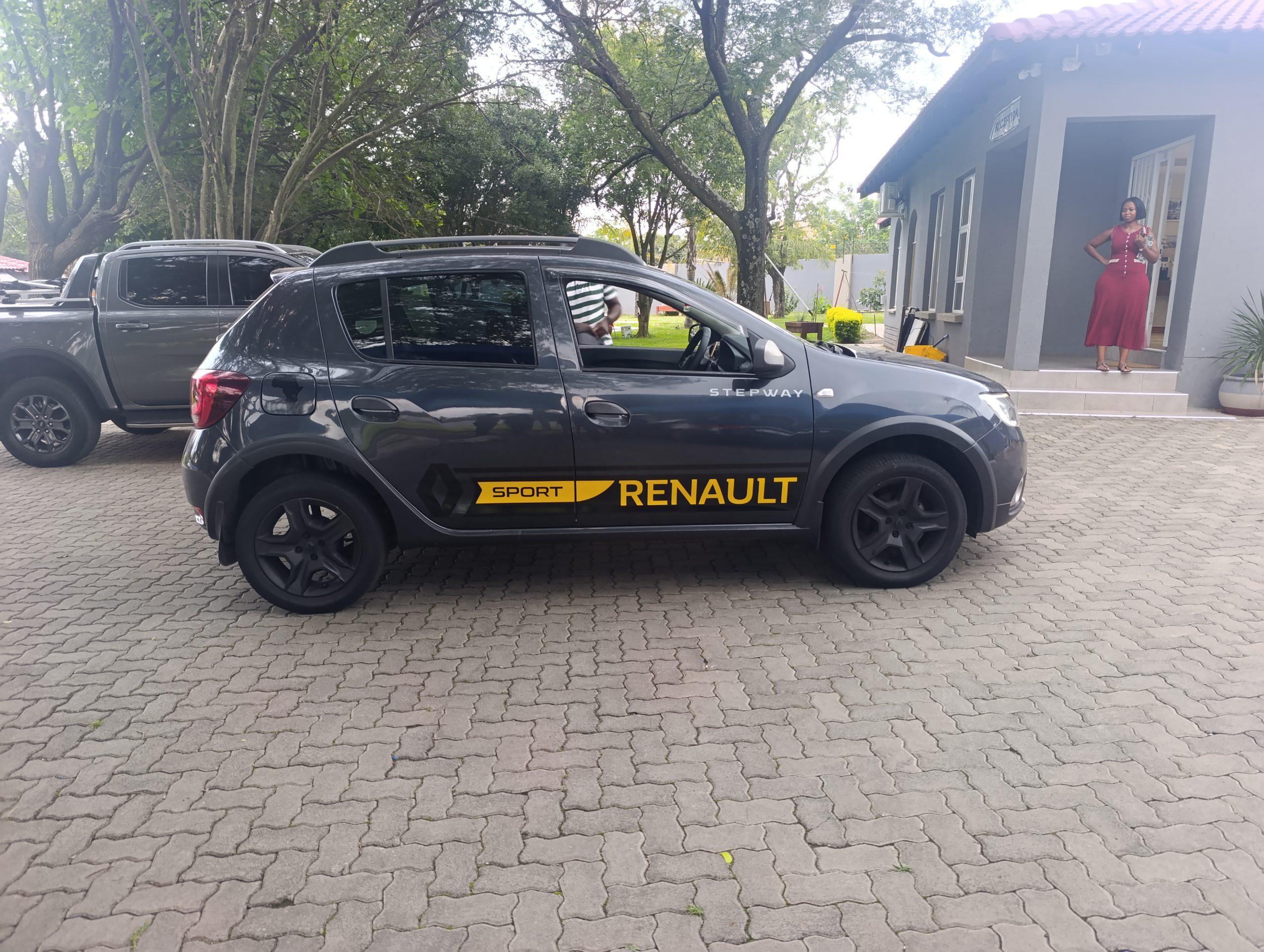
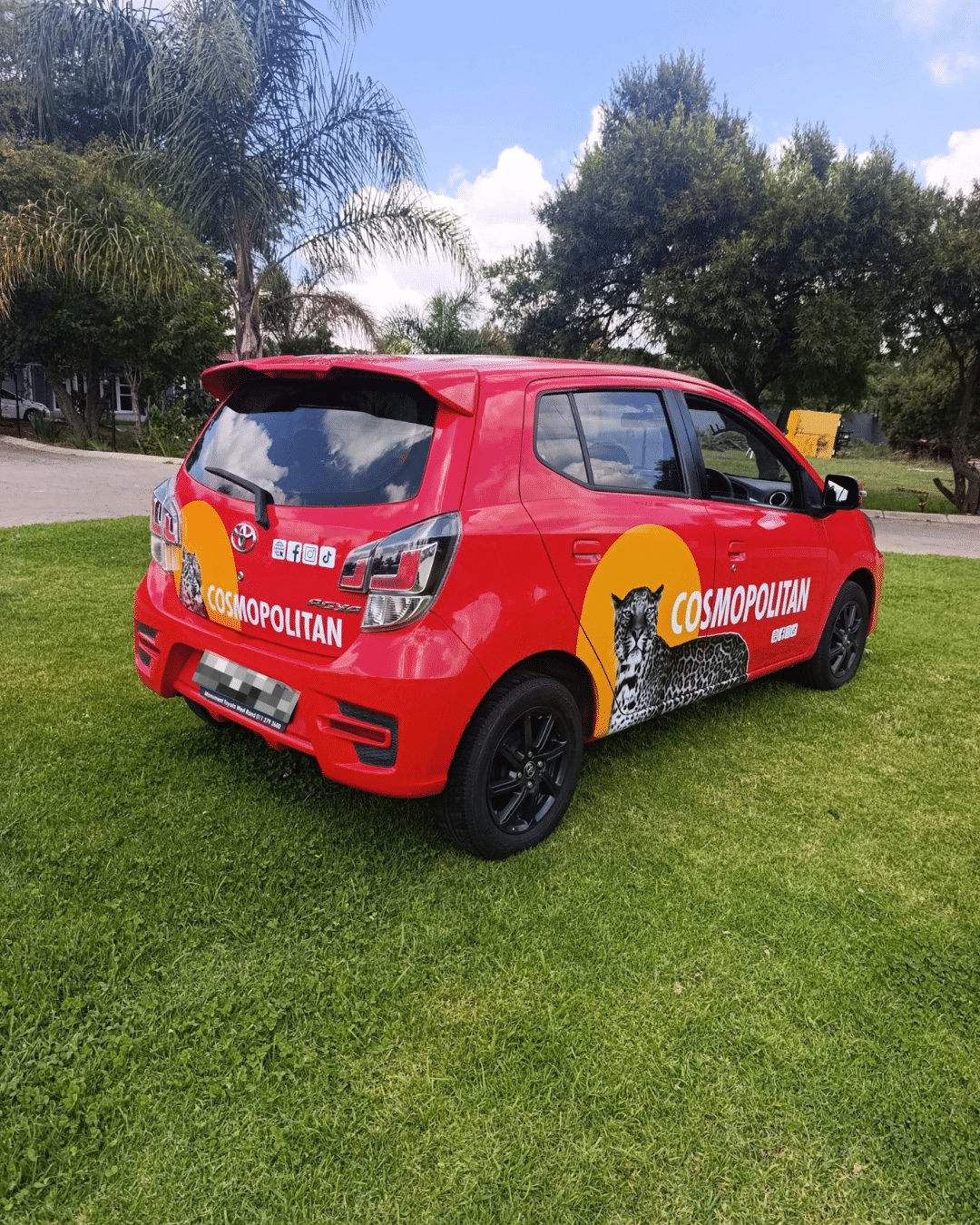
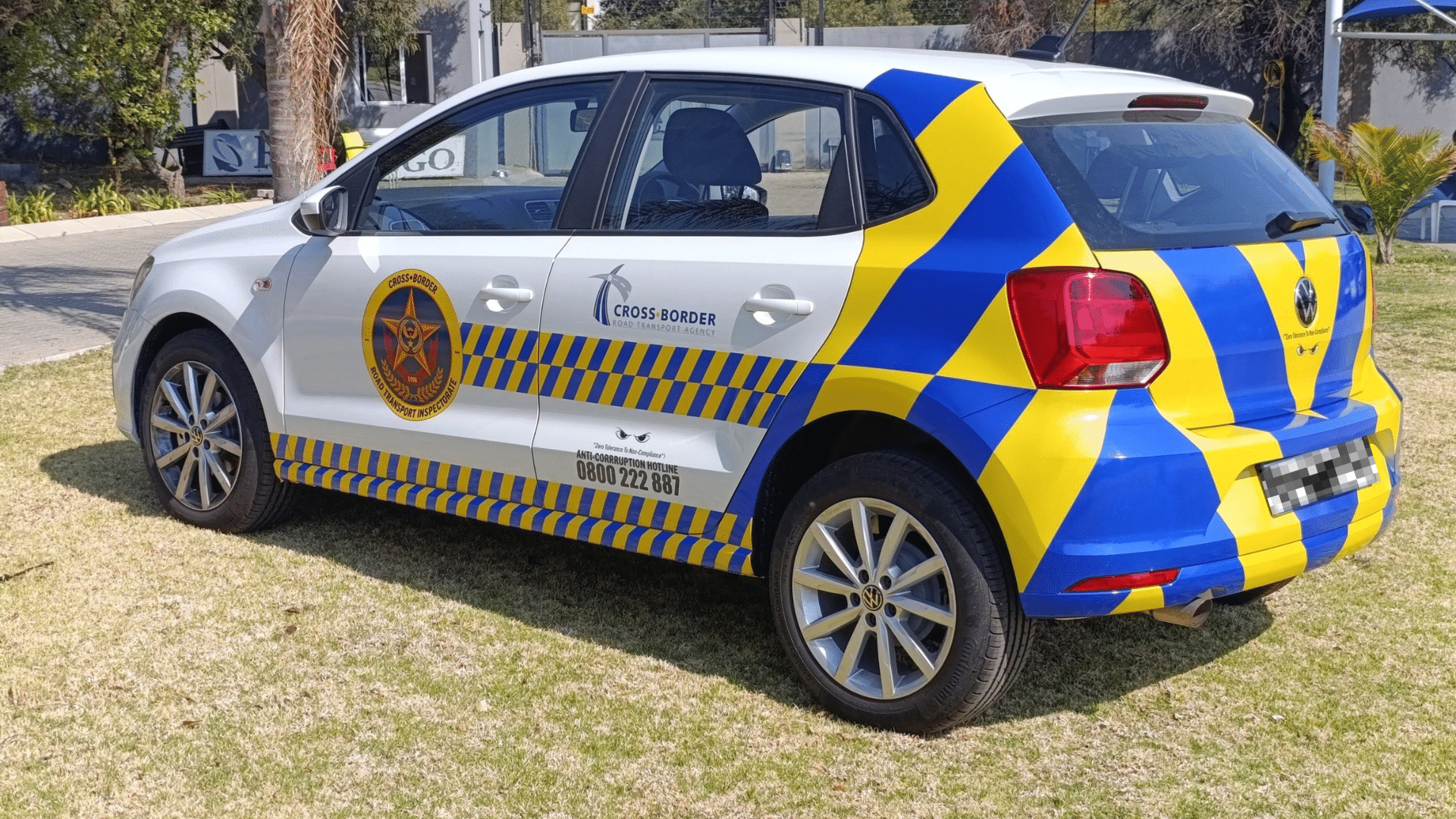
These three show how loosely the words get used. The Renault carries decals only. The Agya sits in the middle: the lettering and the leopard and sun graphic were printed together on one sheet, and the social media icons are decals cut from that same sheet. That takes it above decals alone, but it is still well short of a partial wrap. The Polo is a partial wrap, with a large printed area across the rear quarter as well as the door graphics. None of them is a full wrap, and none of them changes the colour of the car. That's why I'd rather describe a job by what's on the vehicle than by what it's called.
Section 02 What Real Jobs Cost: Four Jobs from Our Workshop
These are four jobs where I can show you the whole picture, from door decals up to a partial wrap on a hatchback. Every figure is the price we put on the job, and VAT is charged at 15%.
| Vehicle | What was branded | Film and finish | Excl. VAT | Incl. VAT |
|---|---|---|---|---|
| Renault Sandero Stepway (hatchback) | Door decals | Cast film, not printed, not laminated | R1,304.35 | R1,500 |
| Toyota Agya (hatchback) | Door lettering with a leopard and sun graphic, tailgate lettering and social media icons, all printed | Cast film, laminated | R3,250 | R3,737.50 |
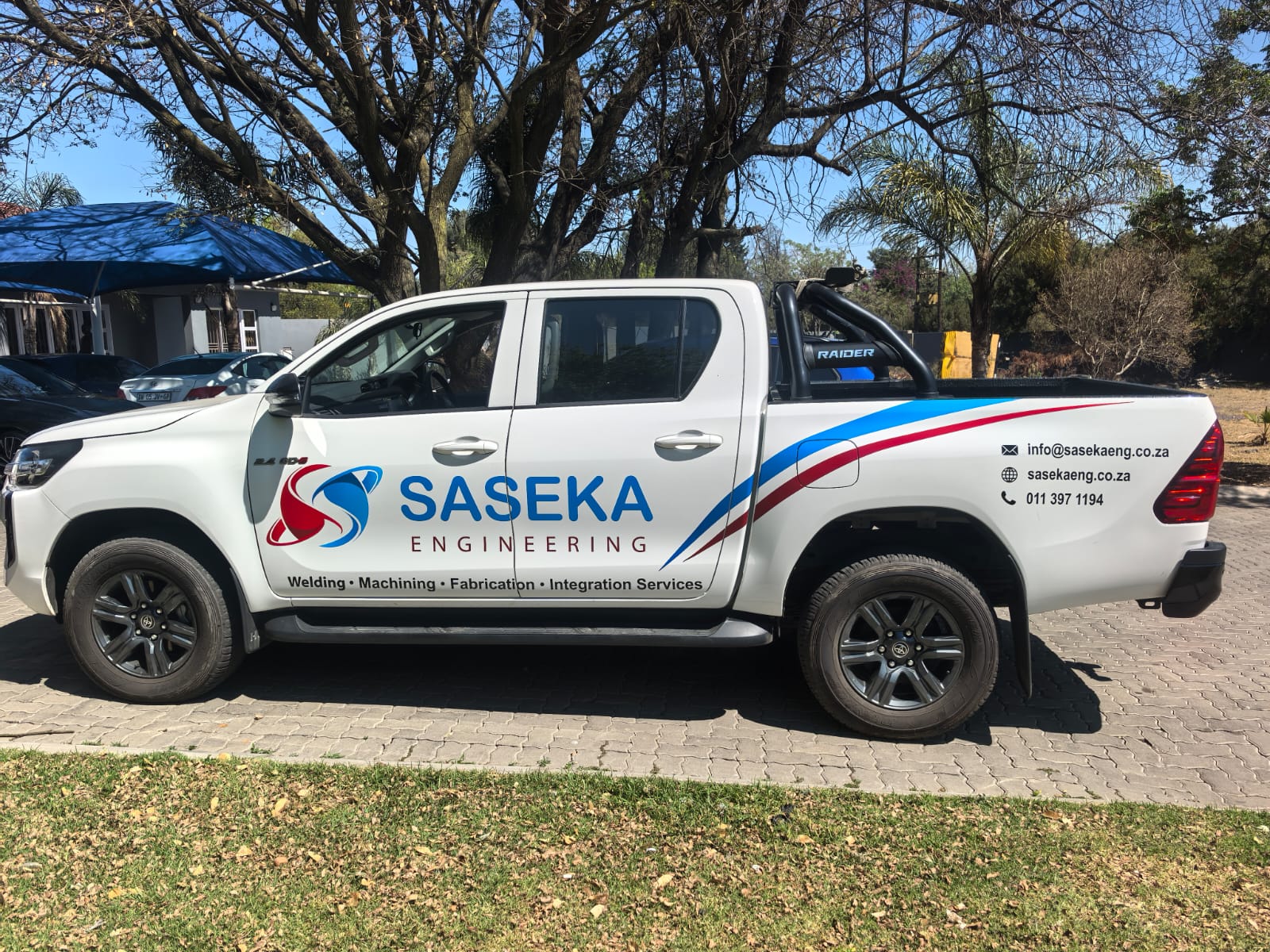
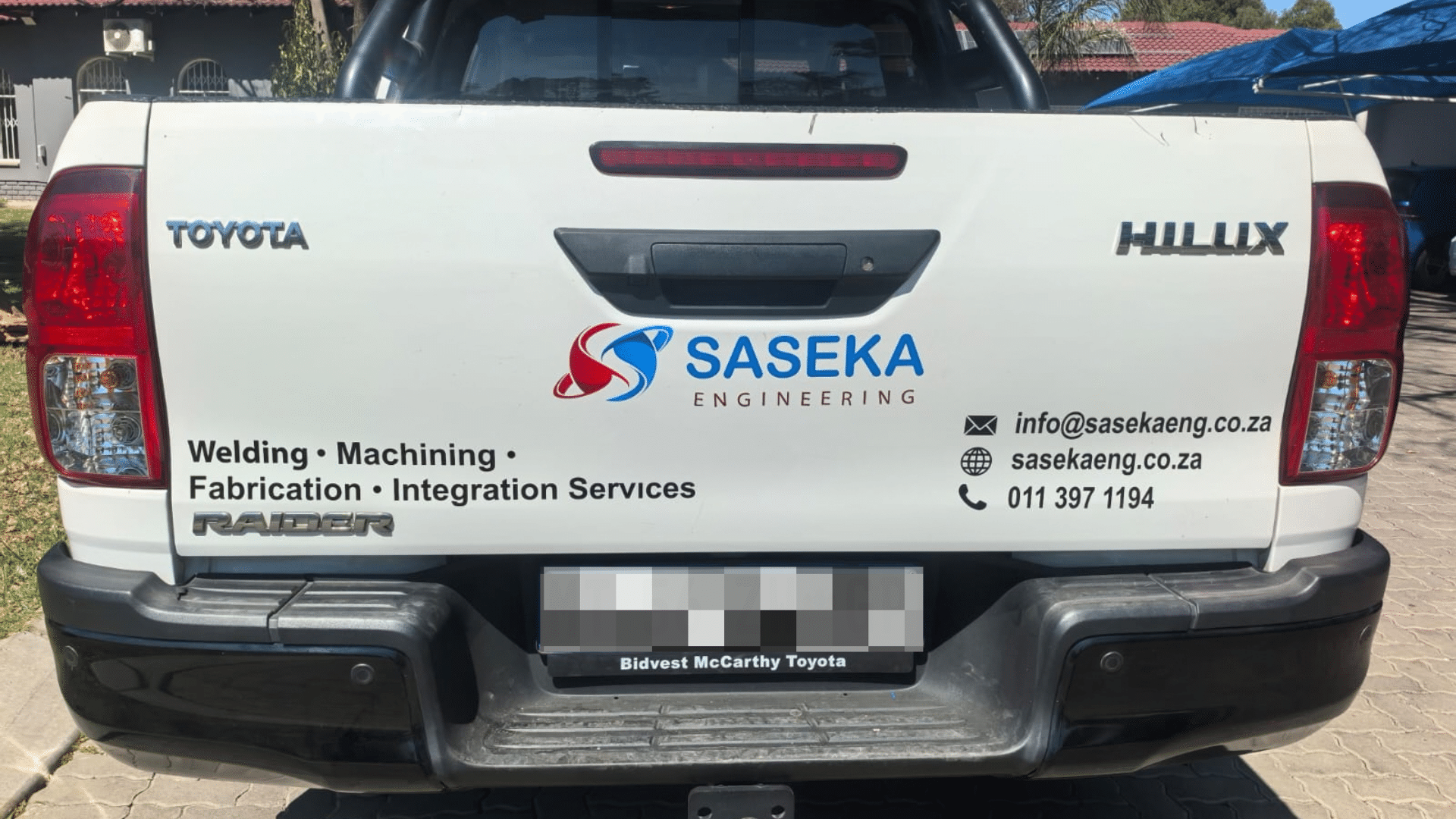
| Toyota Hilux (double cab bakkie) | Door logos and company details, side stripes across the rear door and load bin, tailgate lettering | Laminated | R4,500 | R5,175 |
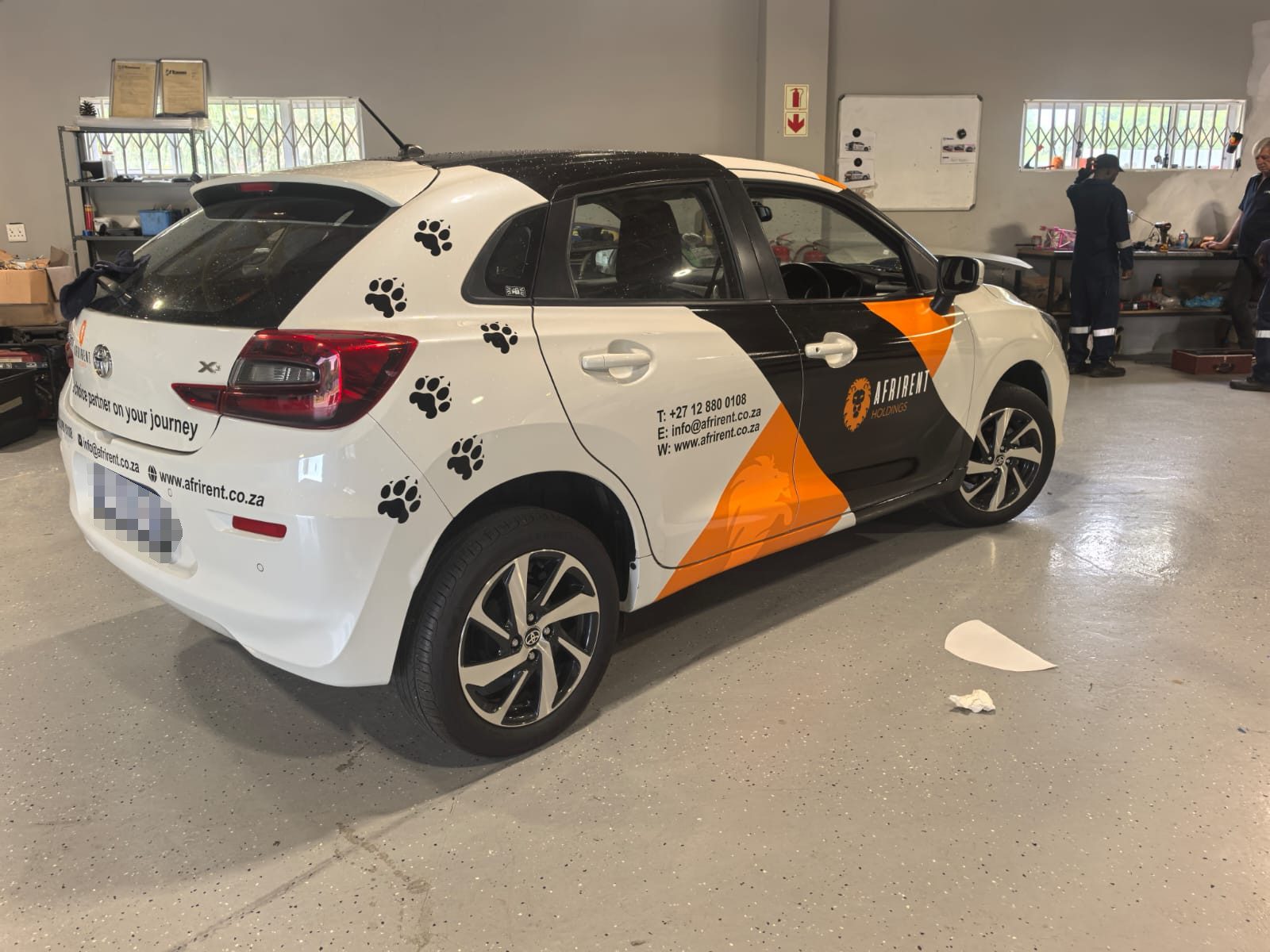
| Toyota Starlet (hatchback) | Partial wrap: black and orange wrap panels across the doors, paw prints along the rear, contact details on the doors and tailgate | Cast film, laminated | R9,565.22 | R11,000 |
The Renault was priced at R1,500 including VAT; the excluding-VAT figure is calculated at 15%. The Hilux invoice also included seat covers, which I've left out of the price above. Each price is for the work shown. Your vehicle, your design and your film choice will change them.
Why there's no full-wrap price here
I'd rather leave a row out than make up a number. The Starlet is the one wrap-level job I can show you with a price, and it is a single job, not a rate: that figure covers that design on that car. Full wraps and colour changes are quoted per vehicle, because the film you choose and the surface area involved swing the price so far in either direction. If a shop quotes you a full-wrap price over the phone without asking about your vehicle, ask what it's based on.
Section 03 Five Things That Move the Price
It's very difficult to say "this is what we charge for branding", because there are too many variables. These are the five that matter, and a quote that doesn't account for them is a guess.
1. The size and shape of the vehicle
A minibus has more surface than a hatchback, and a vehicle with deep curves and recesses takes more care than a flat-sided panel van.
2. How much of it you cover
From decals to a full wrap, the amount of material and installation time rises sharply. This is the biggest single factor.
3. The design
Do you already have artwork, or does a design need to be created for you? And how much of the vehicle does that design actually cover?
4. The film
There are two main types, calendered and cast, and each comes in cheaper and better versions depending on the supplier. I'll explain the difference in the next section.
5. Whether it's laminated
Lamination is applied after your design has been printed on the vinyl. It's a second material and extra labour, so it's an extra cost. Whether it's worth paying for depends on one question.
Section 04 Laminate or Not? Two Scenarios That Make It Easy
Lamination is a clear protective layer over the printed vinyl. It guards the print against UV radiation from the sun, which is the main cause of premature fading, and against surface scratches, fingerprints (oils and chemicals) and humidity or rain. Since it costs extra, the only question that matters is how long the branding has to last.
A two-month campaign
Our recommendation: good-quality calendered vinyl, not laminated
You want two hatchbacks and a minibus branded for a two-month advertising campaign. When it ends, the branding comes off and the vehicles go back to how they were.
Calendered film is cheaper to produce. It's thicker and stiffer than cast, so it stretches less and won't follow a deep curve like a fender edge. Keep the artwork on flat or gently curved panels, such as the doors and the tailgate, and it does the job. For two months, that's fine. Laminating it would mean paying to protect something you're about to remove.
Ten bakkies for five years
Our recommendation: higher-quality cast vinyl, laminated
A company buys or leases ten bakkies and plans to keep them for the next five years. This client wants the longest-lasting branding available.
Cast film is thinner and conforms into recesses and over edges, and the laminate protects the print. Branding that starts fading or peeling in under a year looks tacky and unprofessional, and redoing it costs more than doing it properly once.
Scenario 1 isn't just theory. We branded a fleet of cars for the G20 summit in South Africa, and the branding was coming off again in under two months. We used calendered vinyl with no lamination, simply because it was the more economical choice for a job with such a short life.

Plenty of jobs land somewhere in between. The Agya and the Starlet earlier in this post are cast film with laminate, and the Renault decals are cast film with no lamination. Here's how the two films compare:
| Calendered | Cast | |
|---|---|---|
| Cost | Lower | Higher |
| Thickness | Thicker | Thinner |
| Stretch over curves | Limited | Conforms into recesses and over edges |
| Over time | Carries built-in tension and can pull back | Dimensionally stable |
| Best suited to | Shorter campaigns and flatter panels | Long-term fleets and full wraps |
Based on manufacturer and industry guidance, including Arlon's cast or calendered guide and Sign Warehouse's comparison.
For a two-month campaign, lamination is money wasted. For a five-year fleet, skipping it is money wasted too.
T. Mlati, Technical Operations ManagerSection 05 Why Good Branding Pays for Itself
A branded vehicle advertises your business every day it's on the road, and you pay for it once. Some of our clients have taken that further and asked their own customers to fill in a quick form saying where they saw or heard about the business. More often than not, the vehicles were where people first noticed them.
In the cases I've seen, the work that came from those leads was worth more than the cost of the branding, and that was before the branding came off. It's also why the cheapest quote isn't always the cheapest job. Branding that fades or peels in its first year has to be redone, and a tatty vehicle advertises the wrong thing.
Branding is one of the few forms of advertising you pay for once and keep getting results from for years.
T. Mlati, Technical Operations ManagerSection 06 How to Get an Accurate Quote
If you want a real number, send us the details and we'll quote the job, not a guess. It can be an email, a WhatsApp message or a phone call. This is what we need:
- The vehicle or vehicles. Make, model and year, with photos of each side, the front and the back.
- Your logo and any artwork you already have. If you don't have a design, tell us and we'll talk through creating one.
- The coverage you want. Decals, a partial wrap or a full wrap.
- How long it has to last. A two-month campaign and a five-year fleet are different jobs, and whether it will come off later matters too.
- How many vehicles, and when you need them done.
You can see more of our work in the gallery, and read what we offer on our vehicle branding services page. If you run a security company, the lighting on those vehicles is a separate compliance question, which I cover in what to do if your security company's vehicle lights aren't legal.
FAQ Vehicle Branding Cost: Quick Answers
How much does it cost to brand a bakkie in South Africa?
A recent Toyota Hilux double cab job, with door logos and company details, side stripes across the rear door and load bin, and tailgate lettering, laminated, was R4,500 excluding VAT (R5,175 including VAT). A full wrap is quoted per vehicle, because the film and the surface area change the price so much.
How much does it cost to brand a car or hatchback?
It depends on how much of the car you cover. Door decals on a Renault Sandero Stepway, in cast film with no print and no lamination, were R1,500 including VAT. A Toyota Agya with printed door lettering, a leopard and sun graphic, tailgate lettering and social media icons, on cast film and laminated, was R3,250 excluding VAT (R3,737.50 including VAT). A Toyota Starlet with a partial wrap, on cast film and laminated, was R9,565.22 excluding VAT (R11,000 including VAT). More coverage, a different film or a new design will change that.
Why do quotes for the same vehicle differ so much?
Because "branding" covers very different jobs. Coverage, film, lamination and design all change the price, and a lot of quotes don't say which they're based on. Ask each shop what's covered, which type of film it is, and whether it's laminated.
Do I need to laminate my vehicle branding?
It depends on how long the branding has to last. For a short campaign that comes off in a couple of months, you usually don't. For vehicles you'll keep for years, we recommend it. The two scenarios above explain why.
Do I need to update my registration if I wrap my vehicle a different colour?
Because a wrap isn't a permanent colour change, you don't need to notify the licensing department. It's still sensible to tell your insurer, and if you want certainty for your own situation, confirm with your local licensing department.
Can the branding be removed afterwards?
Yes, we offer branding removal. Once the vinyl and adhesive are off, we polish the paint where it needs it, and the vehicle goes through our wash bay so it's clean and ready for collection.
Get an Accurate Quote
Send us the vehicle, the coverage you want and how long it needs to last. We'll quote the job, not a guess.
Same Vehicle, Different Quotes?
Now You Know Why.
Remmogo brands vehicles for businesses across Johannesburg and Gauteng, from a single hatchback to a full fleet. Tell us what you need and we'll quote it properly.