
What to Do If Your Security Company's Vehicle Lights Aren't Legal in South Africa
A PSIRA and NRTA compliance guide for security company owners, installers and the public — 2026 edition
At a glance
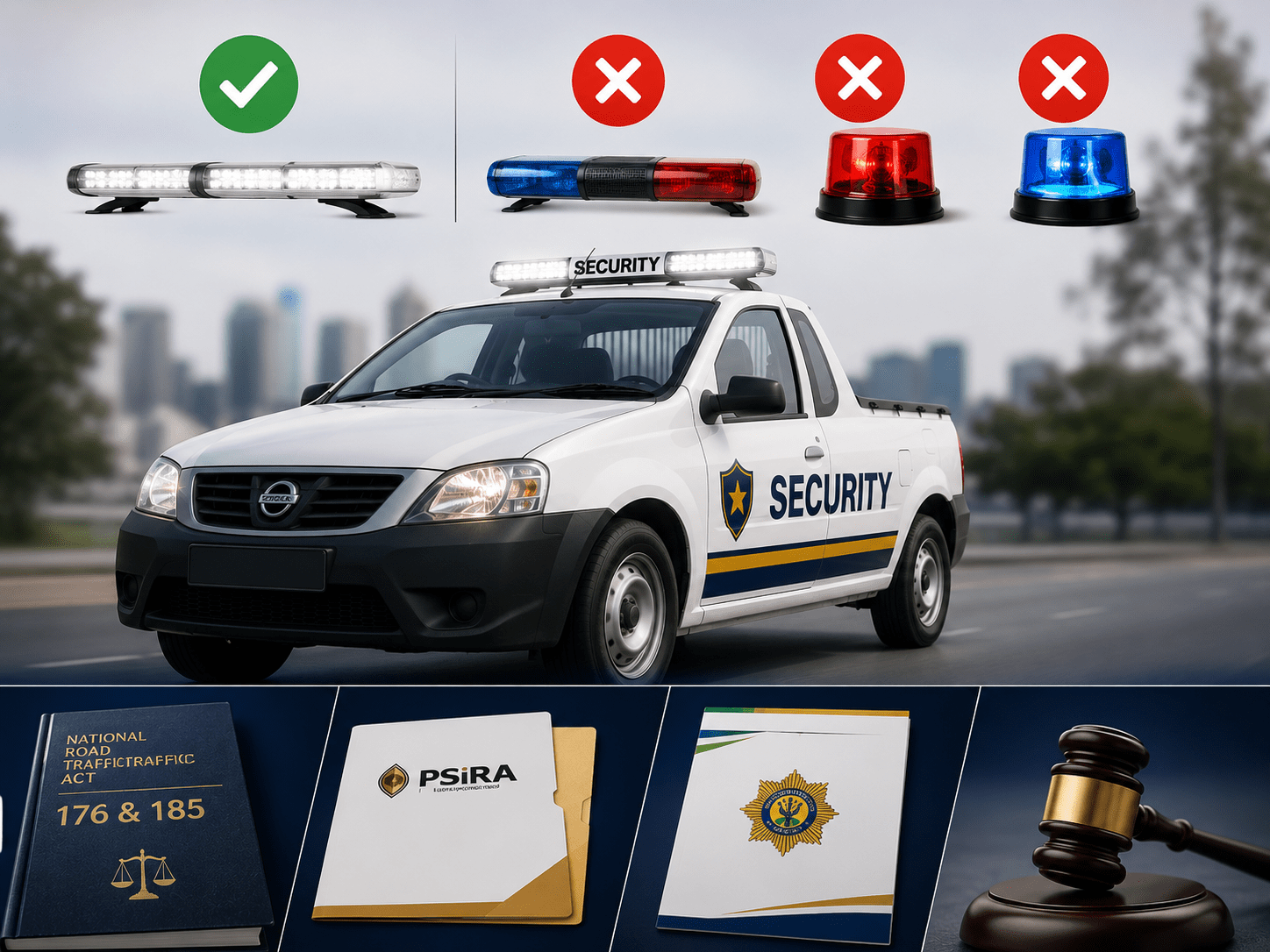
Legal
Steady, diffused white light marked "SECURITY," on a vehicle owned by the registered security business.
Illegal
Rotating or strobing blue or red light — reserved by law for SAPS and municipal police only.
If you run a security company in South Africa, there's a good chance you've had this exact worry: are the lights on our vehicles actually legal? You're not the only one asking. Traffic enforcement across Gauteng and other provinces has visibly tightened over the past year, and a lot of companies that have been fitting the same lighting for a decade are only now finding out it was never compliant.
Here's the short version: the law hasn't changed. Regulation 176(7) of the National Road Traffic Regulations has said the same thing since 2000 — a security vehicle may carry a steady, diffused white light marked "SECURITY," nothing else. What's changed is how closely that's being checked, and how many companies are getting caught out.
This post walks through what's actually allowed, why so many vehicles are falling foul of it, what installers need to change, what the public should know, and — if you think your fleet might already be in breach — exactly what to do about it.
01 — Enforcement
The Rules Haven't Changed. The Enforcement Has.
Let's deal with the misconception first, because it trips up a lot of owners. There's no brand-new PSIRA law specifically targeting vehicle lights in 2025 or 2026. What did happen — and this is real — is that PSIRA proposed amendments to the Private Security Industry Regulation Act in March 2025. Those amendments are about firearms and risk assessments for armed officers, not lighting. If you've heard "PSIRA changed the rules" somewhere, that's very likely what people are actually talking about, and it's a different issue entirely.
What has genuinely changed is enforcement pressure. In the first week of November 2025 alone, Gauteng's Transport Inspectorate pulled 84 unroadworthy vehicles off the road in a single province-wide operation and issued more than 1,500 infringement notices — defective and non-compliant lighting was among the most common reasons vehicles were flagged. That's not an isolated blitz. It's part of a sustained push by provincial traffic authorities to clean up exactly the kind of non-compliant fitting we're talking about here.
The actual rulebook is older than most people assume. Regulation 176 of the National Road Traffic Regulations, 2000 (made under the National Road Traffic Act 93 of 1996) sets out, in detail, who may fit what light to a vehicle. Regulation 185 makes it an offence to fit anything outside those rules. On top of that, PSIRA issued its own industry circular back in April 2017 covering uniforms, insignia, badges and vehicle lights specifically, and in July 2019, PSIRA and SAPS signed a joint directive dealing with the unlawful use of blue lights, look-alike police vehicles, and unauthorised branding.
That's the legal foundation everything below is built on — it's just being enforced with a lot more teeth than it used to be. If you haven't read our earlier piece on what's legal in South Africa for emergency vehicle lights, it's worth a look as background — this post goes a level deeper, specifically for security companies.
02 — The Rule
What Security Company Owners Are Actually Allowed to Fit
Strip away the noise and Regulation 176(7) is actually quite specific. Here's what it allows, in plain terms:
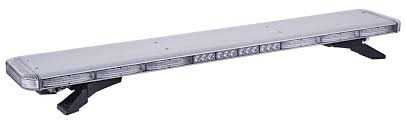
- A white lens bar, showing an intermittently-flashing but diffused white light — not rotating, not strobing.
- The word "SECURITY" and the name of the vehicle's owner, illuminated in the bar.
- Fitted only to a vehicle owned by a registered security business.
- Driven only by a registered security officer, while actually rendering a security service.
That's it. No blue. No red. No rotating beacon. No aggressive strobe pattern, even in white — the regulation specifically says diffused, and traffic authorities have been explicit that modern LED bars which flash, strobe, pulse or simulate rotation are treated exactly the same as old-style mechanical beacons. Swapping to LED doesn't get you around the rule, it just changes what the light looks like while doing it.
We install and service exactly this kind of compliant lighting every day — if you want to see what a proper Reg 176(7) setup looks like, our products page has the specs.
The rule was never complicated. It's the ownership, not the light, that catches most companies out.
— T Mlati, Technical Operations Manager, Remmogo Signaling & Branding
03 — The Owner's Blind Spot
The Ownership Trap Catching New Security Companies
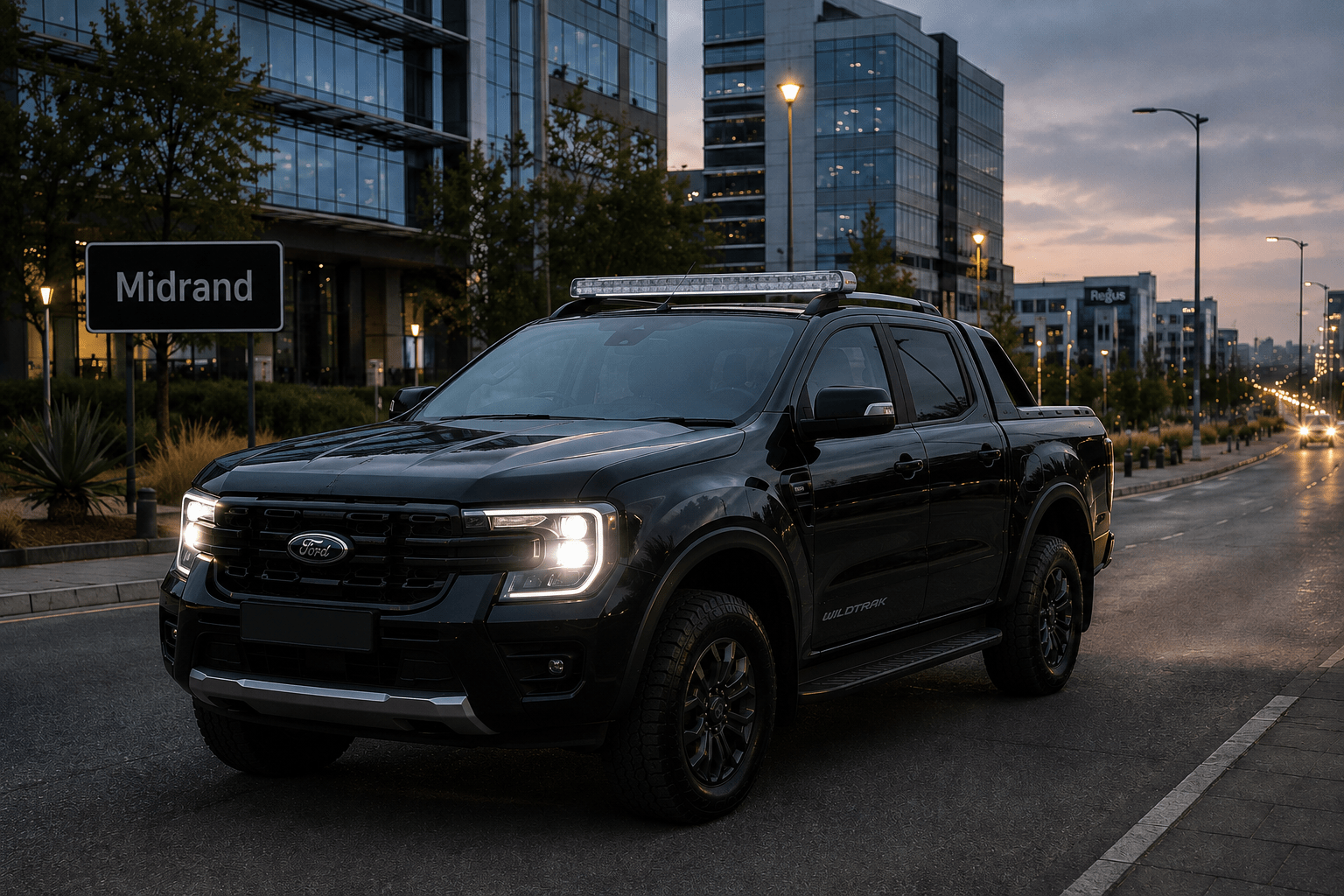
Here's something that doesn't get talked about enough, and it's the reason I wanted this post written in the first place. A client came to us not long ago wanting the white emergency light removed from a vehicle his company was using for security work. Straightforward job, on the surface. The reason behind it wasn't straightforward at all.
The vehicle was under finance, registered in his own name, not the security company's. He couldn't transfer ownership to the business without settling or refinancing the vehicle first, and he wasn't in a position to do that. Once he understood what Regulation 176(7) actually requires — the vehicle has to be owned by the registered security business, not just used by it — he realised the light had to come off before it turned into a real problem for him. He booked the appointment, we removed it, and that was that.
I'd guess this happens more than most people in the industry realise. New security companies, especially small ones just getting started, don't have trading history or financials behind them yet. Banks and finance houses won't lend to a two-month-old company the way they will to an established one. So the practical route a lot of owners take is buying the vehicle personally, using their own credit, and running it as a company vehicle in every sense except on paper. That works fine for the business side of things. It doesn't work for Regulation 176(7), which cares specifically about who's on the registration document, not who's actually using the vehicle for security work.
If this sounds like your situation, you're not doing anything unusual — but you are exposed. The fix isn't always "transfer the vehicle," because sometimes that's genuinely not possible yet. Sometimes the fix is simpler: don't fit the light until ownership catches up, or remove it if it's already there. Better to run a plain vehicle for a while than run one that gets your whole fleet flagged.
04 — For Installers
What Changes for Installers
Installers carry more responsibility in this than a lot of people assume, us included. If we fit a white lens bar to a vehicle without checking that it's actually owned by a registered security business and that the person requesting it is a registered officer, we're not doing a client a favour — we're helping create a non-compliant vehicle, and that has real consequences the day it gets pulled over.
What's changed for us, practically, is that we ask more questions before we fit anything. Registration status, ownership documents, who's actually going to be driving it. It slows a booking down by a few minutes. It also means the client isn't the one finding out at a roadblock that their lighting was never legal in the first place.
The other thing worth being blunt about: fit only to Regulation 176(7) spec. White, diffused, non-rotating, marked correctly. Don't fit blue or red under any circumstances, and don't fit a strobe pattern because a client asks for something "a bit more visible." It doesn't matter how good the intention is — it's not legal, and as the installer, refusing that request protects your client as much as it protects you.
As South Africa's only authorised Whelen distributor, we're in a slightly different position to a general auto-electrician doing this on the side. We deal with compliant lighting daily, we know the spec cold, and we'd rather turn down a job than fit something that gets a client fined or their vehicle impounded. If you're an installer reading this and you're not sure whether a request crosses the line, our contact page is open — happy to talk it through.
05 — For the Public
What the Public Should Actually Know
If you're not in the security industry at all, here's what's actually useful to you. A legitimate security vehicle in South Africa will show a steady white light, not flashing aggressively, not rotating, with the word "SECURITY" and a company name visible on it. That's the extent of what they're legally allowed to display.
If a vehicle is showing blue lights, or red, or a rotating/strobing pattern in any colour, it is not a lawfully equipped security vehicle — regardless of how official it looks. You are under no legal obligation to pull over, yield, or move out of the way for it the way you would for SAPS or an ambulance. White lights on a security vehicle are, at most, a courtesy signal that they're present and working, not a command.
This matters because the same misuse of lights that gets a security company in trouble with PSIRA and traffic authorities is also, occasionally, what's used by people impersonating security or law enforcement for far worse reasons. If something about a vehicle looks off, trust that instinct.
None of this is about security companies being the bad guys, to be clear — the overwhelming majority just want their fleet compliant and their officers safe. It's about everyone, the industry and the public, knowing where the actual line is.
Enforcement caught up with the industry faster than most owners expected. The vehicles getting flagged aren't the ones deliberately breaking the rules — they're the ones that never checked.
— T Mlati, Technical Operations Manager, Remmogo Signaling & Branding
If You Think You're Already in Breach
- 1Audit your fleet. Check every vehicle currently fitted with a lens bar or identification light, not just the obvious ones.
- 2Match ownership to registration. Confirm each lit vehicle is actually registered to your security business, not to an individual, a director personally, or a finance house.
- 3Check the light itself. Steady and diffused, white only, correctly marked — anything rotating, strobing, or in blue/red needs to come off immediately.
- 4Get a professional compliance check. An accredited installer can assess your whole fleet in one visit rather than you guessing vehicle by vehicle.
- 5Keep the paperwork. Registration documents, PSIRA registration, and proof of compliant fitting should be something you can produce on the spot if you're stopped.
Not Sure Where Your Fleet Stands?
We'd rather help you find out now than have you find out on the N1.